
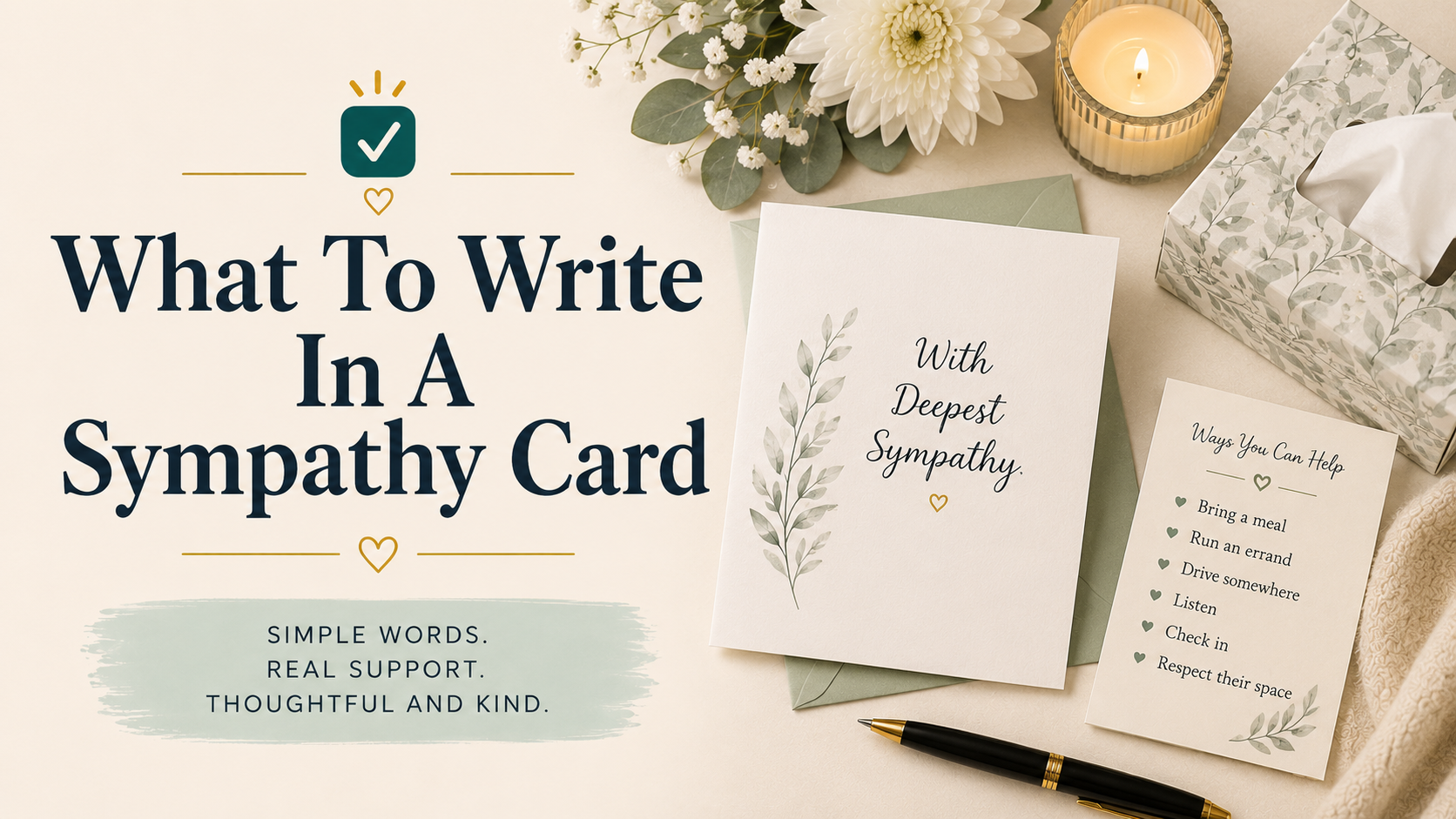
The Normal Answer
Keep It Simple, Sincere, And Kind.
When you write a sympathy card, you do not need to find perfect words. In fact, simple words are usually better. The point is to let the person know you are sorry for their loss, you care about them, and you are thinking of them.
The Basics
You Do Not Need Perfect Words.
Sympathy cards are hard because loss is hard. Most people worry their words will sound too small, too awkward, too formal, or not helpful enough.
But a sympathy card is not supposed to fix grief. It is simply a way to say, “I see your loss, I care about you, and I am thinking of you.”
The Normal Version
“I’m so sorry for your loss. I’m thinking of you and your family during this difficult time.”
What To Write
A Sympathy Card Can Be Very Short.
You do not have to fill the whole card. A few sincere sentences are enough. It is better to write something simple and kind than to force a long message that does not feel natural.
| Part | What It Does | Example |
|---|---|---|
| Acknowledge The Loss | Shows you understand why you are writing. | “I’m so sorry for your loss.” |
| Show Care | Lets them know they are not forgotten. | “I’m thinking of you.” |
| Offer Support | Gives comfort without pressure. | “I’m here if you need anything.” |
| Close Kindly | Ends the card gently. | “With love and sympathy.” |
Simple Sympathy Card Message
“I’m so sorry for your loss. I’m thinking of you and wishing you comfort in the days ahead.”
Simple Messages
Short Sympathy Card Messages Are Normal.
A short message is not rude. In many cases, it is exactly right. The person receiving the card may be overwhelmed, tired, or reading many messages at once.
Short Messages You Can Use
- “I’m so sorry for your loss.”
- “Thinking of you and your family.”
- “Wishing you comfort and peace.”
- “My heart goes out to you.”
- “I’m holding you close in my thoughts.”
- “Sending love during this difficult time.”
- “I’m so sorry. I care about you and I’m here.”
Relationship
What To Write Depends On How Close You Are.
The closer you are, the more personal your message can be. If you are not very close, it is completely fine to keep the card respectful and simple.
| Relationship | What To Write |
|---|---|
| Close Friend | “I love you. I’m so sorry you are going through this. I’m here for you in any way I can be.” |
| Family Member | “I’m grieving with you and thinking of our family. Sending you so much love.” |
| Coworker | “I’m so sorry for your loss. Thinking of you and your family.” |
| Neighbor | “I’m so sorry for your loss. Please know we are thinking of you.” |
| Acquaintance | “Please accept my sincere condolences.” |
Avoid This
What Not To Write In A Sympathy Card
Most people are trying to help, but some phrases can accidentally make grief feel smaller, rushed, judged, or explained away.
Do Not Try To Explain The Loss: Avoid turning the death into a lesson, reason, or silver lining.
Do Not Minimize It: Phrases like “At least they lived a long life” may not feel comforting.
Do Not Compare Grief: Avoid making the card about your own loss unless it is brief and truly supportive.
Do Not Pressure Them To Feel Better: Grief does not follow a neat schedule.
Do Not Ask For Details: A sympathy card is not the place to ask what happened.
Usually Safer
“I’m so sorry. I’m thinking of you.” is almost always better than trying to make the situation sound okay.
Memories
Should You Share A Memory?
If you knew the person who died, sharing a small, kind memory can be very meaningful. Keep it brief and warm. You do not need to write a full story.
Memory-Based Messages
- “I will always remember how kind she was to everyone around her.”
- “He had such a wonderful laugh. I feel lucky to have known him.”
- “Your mom made everyone feel welcome. I will never forget that.”
- “I have such fond memories of your dad. He was truly special.”
- “Their kindness made a real difference, and I’m grateful I got to know them.”
If you did not know the person well, you can skip the memory and simply offer sympathy.
Support
How To Offer Help Without Making It Vague
“Let me know if you need anything” is common, but grieving people may not know what to ask for. A specific offer can be easier to accept.
Helpful Offers
- “I can bring dinner this week.”
- “I can run errands if that would help.”
- “I can drive you somewhere if you need a ride.”
- “I can help make calls or organize food.”
- “I can check in next week if that is okay.”
Less Helpful
- “Tell me what to do.”
- “Call me anytime” if you do not really mean it.
- “I know exactly how you feel.”
- “Everything happens for a reason.”
- “You need to stay strong.”
Simple Offer Of Help
“I would like to bring dinner one night this week. No pressure at all, but I’m here if that would help.”
Signing
How To Sign A Sympathy Card
Your closing can be simple. Choose a sign-off that matches your relationship with the person receiving the card.
| Tone | Sign-Off Ideas |
|---|---|
| Warm | With love, With sympathy, Thinking of you |
| Close | All my love, Love always, Holding you close |
| Respectful | With deepest sympathy, With sincere condolences |
| Coworker | Thinking of you, With sympathy, Wishing you comfort |
| From A Family | With love from all of us, Thinking of you, The Smith Family |
Timing
Is It Too Late To Send A Sympathy Card?
No. A late sympathy card is usually still appreciated. Grief does not end after the funeral, the service, or the first week. If you missed the immediate window, send the card anyway.
Late Sympathy Card Wording
- “I’m sorry this card is late, but I wanted you to know I’ve been thinking of you.”
- “I know some time has passed, but I’m still holding you and your family in my thoughts.”
- “I’m sorry I did not reach out sooner. I’m so sorry for your loss.”
- “I have been thinking of you and wanted to send my sympathy, even though this is late.”
Scripts
Simple Sympathy Card Messages You Can Use
Use these as-is, or adjust them so they sound more like you.
| Situation | What To Write |
|---|---|
| Very Simple | “I’m so sorry for your loss. Thinking of you and your family.” |
| Close Friend | “I love you. I’m so sorry. I’m here with you through this.” |
| Someone You Do Not Know Well | “Please accept my sincere condolences. Wishing you comfort and peace.” |
| Loss Of A Parent | “I’m so sorry about your mom. I’m thinking of you and sending love.” |
| Loss Of A Spouse | “I’m heartbroken for you. I’m thinking of you and here for you.” |
| Loss Of A Pet | “I’m so sorry. I know how loved they were, and I’m thinking of you.” |
Grief Support
This Is About Wording, Not Grief Counseling.
This guide is meant to help with the words in a sympathy card. It is not a substitute for grief counseling, crisis help, religious guidance, legal help, or professional support.
For general information about grief and bereavement, you can visit the National Cancer Institute grief and bereavement resource.
Checklist
Quick Checklist Before You Send The Card
- Keep the message simple and sincere.
- Say you are sorry for their loss.
- Use the person’s name if it feels appropriate.
- Share a short kind memory if you have one.
- Do not explain the loss or search for a silver lining.
- Offer specific help if you can actually follow through.
- Sign it in a way that matches your relationship.
- Send it even if it is later than you meant to.
One More Normal Note
Your Card Does Not Have To Fix Anything.
A sympathy card cannot take away grief. It can only offer a small piece of care.
That is enough. A simple, honest message is usually better than trying to find perfect words.
Suggest A Guide
Is There Another Normal-Life Thing Nobody Explains?
Tell us what feels confusing, awkward, or weirdly unwritten. It may become a future guide on The Normal Person Guide.
Suggest A Guide